France has a savings culture built around a handful of regulated accounts known as livrets. The best known is the Livret A, but the Livret de développement durable et solidaire, usually called the LDDS, is just as popular. Both are tax free, guaranteed by the state and available at almost every bank in the country.
Foreign residents often hear about these accounts from French colleagues and wonder whether they can open one too. In most cases they can, provided they live in France and can supply the documents banks are legally required to check.
What the Livret A and LDDS offer
Regulated savings accounts pay an interest rate set by the authorities rather than by individual banks. Interest is exempt from income tax and social charges, and the money can be withdrawn at any time. That combination of safety and flexibility makes them a natural place for emergency savings.
Each account has a deposit ceiling. The Livret A cap is higher than that of the LDDS, and one person can hold one of each. Rates and ceilings are reviewed periodically, and the Banque de France publishes official information on the current rules and on how regulated savings fund social housing and the green economy.
The sustainable angle of the LDDS
The LDDS is designed to channel savings towards small businesses and projects linked to the energy transition and the social economy. Since recent reforms, banks also offer savers the option to donate part of their balance to social or solidarity organisations.
For many expats who care about where their money goes, this sustainable dimension is an extra reason to choose the LDDS alongside or instead of a standard account.
Who is eligible
Regulated accounts are reserved for individuals whose tax residence is in France. Nationality does not matter, so a British, American or Indian citizen living in Lyon can open one. Non-residents generally cannot, although some exceptions exist for specific situations.
Children can also hold a Livret A in their own name, opened by their parents. This is a popular way to start saving for a child’s future, and it is where translated civil documents often become necessary.
Documents banks usually request
Banks must verify identity, address and tax residence. Expect to provide a passport or residence permit, a recent utility bill or rental contract, and sometimes a tax notice. For employees, a payslip or employment contract can also be requested.
When opening an account for a child, the bank needs proof of the parent-child relationship. French families show the livret de famille. Foreign families often present a foreign birth certificate, and if it is not in French, the bank may ask for an official version.
Why birth certificates need translating
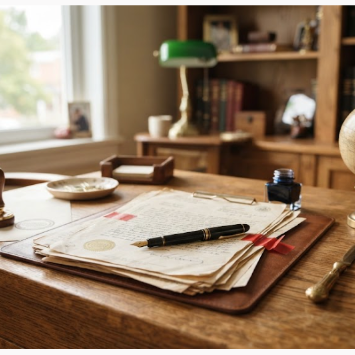
French bank staff cannot be expected to read certificates in Hindi, Polish or Portuguese. Even English documents may be questioned by a cautious adviser. An accurate birth certificate translation produced by a recognised translator removes doubt and allows the account to be opened without repeated visits.
The same translation is useful well beyond banking. Schools, health insurance funds, family allowance offices and prefectures frequently ask for the same document, so a single certified translation can serve several purposes.
Getting the translation right
Names must match the passport exactly, including accents, middle names and the order of surnames. Dates should follow French conventions. Stamps, seals and handwritten notes must be translated too, because an incomplete translation can be rejected.
A compliant translation contains every stamp and note on the original. If the certificate also needs an apostille, it is usually added before the translation is made.
Choosing a bank
All major French banks offer regulated accounts with identical rates. The choice therefore depends on everyday banking needs: English-language customer service, online tools, branch locations and fees on the current account. Some online banks are particularly popular with expats because their apps are available in several languages.
Opening a livret is usually free and quick once the current account is in place. Transfers between the two accounts are instant, which makes regular saving easy to automate.
Joint accounts and couples
Regulated savings accounts are strictly individual, so couples cannot share a single Livret A. Each partner opens their own. When a foreign couple wants to manage savings together, the bank may still ask for a marriage or partnership certificate to link accounts or set up mandates, which again raises the question of translated civil documents.
Taxes and reporting abroad
Although interest is tax free in France, residents who are also taxpayers elsewhere, such as US citizens, may have reporting obligations in their home country. It is worth checking with a tax adviser familiar with both systems before depositing large amounts.
Keeping clear records of balances and interest, ideally with translated statements where necessary, simplifies any future declarations.
Regulated savings accounts are one of the simplest financial tools France offers. With the right documents in hand, including properly translated certificates, foreign residents can start saving securely from their first months in the country.